|
What is oil painting? Oil paints on the canvas. It's an indisputable definition. I think though that oil painting is more than that. From the 16th century to the beginning of the 20th century artists used the seven layer technique. Like music where there are seven notes, seven keys, and within each there are seven more. 7 days in a week. 7 Layers of Paint. Each layer in oil painting must dry for seven weeks. The energy which we receive from old paintings in museums, like ghosts in old castles with old paintings, is related to this magic figure. The main thing is to begin. |

with the laws of the discipline.
1. Stop looking at modern art and stop loving it. Modern bright colors and hue contrasts destroy the subtle vision of the painter who risks to study classical painting in our time.
2. Many painters get an energy charge from music. Stop listening to any modern music and begin listening only to classical music. Try to begin loving it.
3. Brushes. You should have many brushes so that not to lose time washing them while working. Take a new brush for every new mix. Use round kolinsky brushes, #1 to #10. To cover larger surfaces, you will need a few #20 to #35 brushes. For final strokes PRIPLAVLENIYE (final blending) you will need a few very soft round and flat average size squirrel brushes. Brushes should be treated very carefully. After every session they should be washed in turpentine and after that in warm water with soap.
4. The palette must be made of hard dark wood, best of all, of pear. After work wash the palette with turpentine and scrape it with a razor. Before work wipe the palette with linseed oil.
5. The canvas should be primed additionally a few more times and in conclusion it should be ground with fine sandpaper. After that the canvas should be scraped with a razor to remove the canvas texture till smooth dead surface similar to the egg's surface is achieved.
6. It is very important to have objects for still lifes in the studio. Don't be stingy at garage sales and flea markets, you may regret it later.
7. The
drawing is made on paper life-size to the smallest details. Then it is transferred to the canvas by carbon-paper. After that the drawing is outlined with brown ink because the first oil layer - IMPRIMATURA (transparent coat that is equal to the middle tone of largest, lightest object in painting) - will wash away the pencil, but the ink will remain visible almost through the last layers.
8. Before each new layer the canvas (ideally dried during 7 weeks) is carefully wiped with a half of an onion (in order to prepare the dried surface to absorb better) and then with linseed oil. After that the canvas is wiped with a soft piece of cloth.
9. The lacquer for IMPRIMATURA is made of 2% of dry DAMAR CRYSTALS and 98% of turpentine. The lacquer for painting is made of 5-10% of dry resin and 90-95 % of turpentine. A couple of lavender oil drops are added directly to the oil-can. Scientists say lavender oil stimulates the brain. However, I think that old masters added it to eliminate the heavy turpentine smell. The lacquer for the final step consists of 30% of DAMAR CRYSTALS, 3% of linseed oil, and 67% of turpentine.
10. The basic set of paints is the following: "Rembrandt" oil colors: Flake White, Yellow Ochre Light, Red Ochre, Burnt Umber, Raw Umber Ivory and Lamp Black (7 Basic Colors), and 4 extra colors (when necessary) which I use in the last layers: Flake Yellow (instead of it also can be used Cadmium Yellow Deep), Madder Lake Deep, Chinese Vermilion, Prussian Blue. But be careful, use these last 4 colors very sparingly.
11. IMPRIMATURA, or the first paint layer. The canvas is covered with a liquid mixture based on Red Ochre, Yellow Ochre Light and Ivory Black (the mixture should have an olive hue).
12. The shadow PODMALYOVOK (the process of creating intermediate layers) is made with Burnt Umber in two layers (2nd and 3rd layers). In the second layer all details are made excluding the texture. In the third layer LESSIROVKA of the main tone masses is made with a big brush.
13. The dead layer - the fourth PODMALYOVOK - is made with white lead, light ocher, red ocher, and burnt bone. The aim of this PODMALYOVOK is penumbra. The picture must look as if its objects were lit with moonlight - olive cold gray color. Colors are applied thickly, half a tone higher, shadows are very transparent, half a tone lower.
14. The first and the second TEL'NII (flesh tones: main life colors) PODMALYOVOK (5th and 6th layers). The first TEL'NII PODMALYOVOK is made half a tone lighter and two tones lighter in colors; and half a tone darker and two tones lighter in shadows. The same is true of the second TEL'NII (?body?) PODMALYOVOK.
15. LESSIROVKA - the seventh layer: details of textures, thickly applied highlights, bright reflections, and signature. In this layer you may use additional paints: Prussian blue, red cinnabar, yellow flake (cadmium yellow deep), madder lake deep.

Observation is a very important aspect of learning to paint in the classical style. To master the technique, it is best to watch a master paint for long periods of time. In the the contemporary system of teaching, the student sits down right off with a handful of brushes and a palette of paint, and starts slapping it on the canvas, while the instructor looks on and makes comments or suggestions now and then. It is therefore, very important for those wishing to seriously pursue classical technique to just watch for a while.
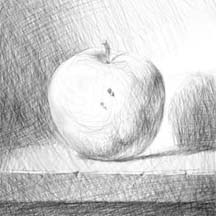
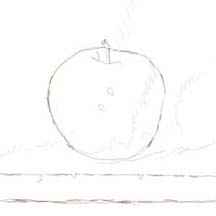
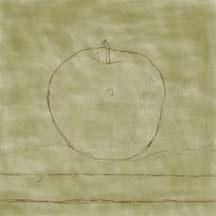


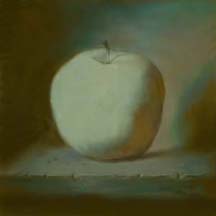
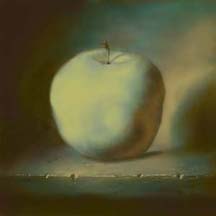


A Few words about Flemish technique.
I was classically trained and have dedicated most of my time to studying
and emulating the 7 layer techniques of the 16th century Flemish Masters
such as Rubens, Van Duke and Snyders, which is practiced by very few artists
today as it is no longer taught in art schools .
Comparing any 7 layer piece by the Masters of the 16-17th century with
the realistic painting of some artists of the 19 and even 20th centuries,
you will become convinced that despite their age, the older ones are in
better condition in regard to the colors and surface of the ground (prime)
layer and the varnish.
Very many paintings in which artists did not use the classic Flemish Masters'
techniques of 7 layers, did not pass the test of time. We see how works
of Russian "Peredvizhniki" of 19th century and even the impressionists
of the 20th century are becoming gray and loosing their original condition
and quality. The main damage was caused by the refusal to use the optical
mixture of 7 layers, in which every dried layer is responsible for special
color and tone.
The artists little by little started to use physical mixture of the colors
(very often incompatible) right off the palette, as well as a variety
of new pigments, attractive but unfortunately not time tested. For example
fantastic colors in the paintings of Rubens and Snyders are made with
only 3 basic colors: Flake Yellow, Vermilion and Prussian Blue. Black,
Flake White, Ochre Light and Red were not considered to be colors because
artists performed the preliminary work with them until the final layers.
The experiments with the different new varnishes also didn't prove to be any better. The reading of the treatises by Leonardo Da Vinci and other old masters, visits to the main museums and depositories of Russia and many museums in Italy and USA convinced me that I'm right in the use of the traditional classic 7 layer technique of oil painting.
I use linen, cotton or hardboard , primed with my own preparation of Flake White and linseed oil. I prepare varnish using lavender oil, a recipe used by many old masters. I paint with kolinsky brushes (from #0 to #30) using a pearwood palette. The optical mixture of the colors allows me to achieve the pearl illusion of reality plus warranty for centuries of the quality of the surface from different kinds of losses such as the change of colors, dimming or cracking in the ground and varnish. The artist Engr guaranteed to his clients this quality for 300 years. I also can
Alexei L. Antonov